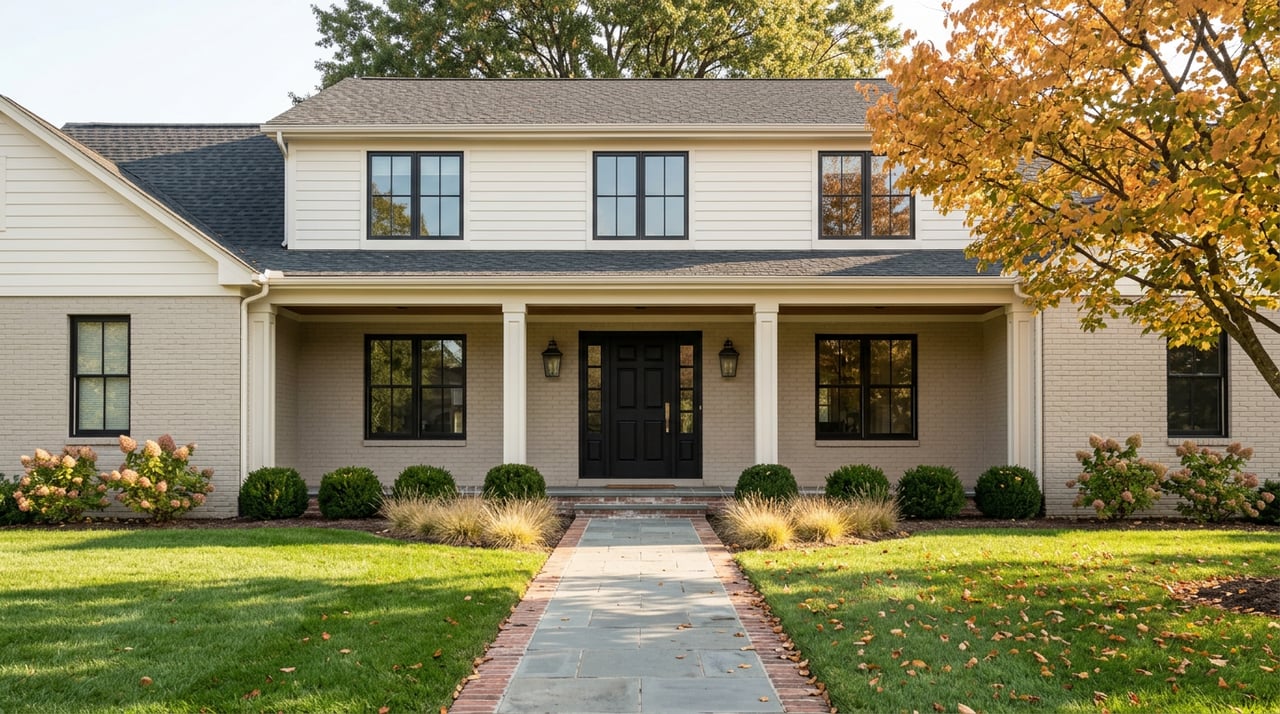
For twenty years, most Fairport sellers handled New York's Property Condition Disclosure Statement the same way their attorney did: they didn't. They handed the buyer a $500 credit at closing and kept a lengthy questionnaire out of the file. That routine ended on March 20, 2024. Sellers in Fairport are now doing the disclosure work in daylight, on a form that has grown to include seven new flood-history questions written almost as if a Village of Fairport home were the drafting committee's example.
That is the shift this post is about. The pricing story in Fairport is well covered elsewhere. What is not covered is the mechanical change underneath it: the paperwork a seller signs before the buyer ever books an inspection has moved from a nuisance to the single most consequential document in the file. On a 1930s canal-adjacent home, it is now where the deal turns.
The document that used to be optional
Under the amended Property Condition Disclosure Act, a completed PCDS has to be delivered to the buyer before the buyer signs a binding contract, attached to the contract, and updated at transfer of title or occupancy. The $500 opt-out was repealed in the same bill that added the new flood questions, taking the questionnaire from 48 items to 56. The statute still says a seller has no duty to inspect or check public records to answer, but "actual knowledge" is now the standard, and willful misstatements can create liability for actual damages long after closing.
For a seller in a newer Perinton subdivision, this reads as a minor procedural change. For a seller of a pre-war village home, it is a different exercise entirely, because the questions land on systems the seller has genuinely lived with for decades: original plumbing runs, plaster walls hiding old wiring, basements that saw the 1970s and 1980s canal-corridor weather events, roof edges that have been reflashed twice.
What Fairport's housing stock actually forces into that document
Fairport's village housing stock has a median construction year of 1938, and more than 52 percent of homes in the village were built before the 1940s. That single fact is the reason a Fairport PCDS looks different from a PCDS in most Monroe County suburbs. A seller filling out the amended form on a 1928 colonial on West Church Street is answering the same questions as a seller in a 2015 subdivision, but the honest answers point to a different set of items.
The pre-list conversation is now organized around what will show up in writing:
| PCDS territory | What a pre-war Fairport seller is actually disclosing |
|---|---|
| Structural | Original framing, hand-set foundations, plaster-and-lath, prior plaster repair |
| Mechanical | Age of service panel, any remaining knob-and-tube, mixed copper and galvanized runs |
| Basement and drainage | Any historic seepage during canal-corridor storm events, sump activity |
| Environmental | Pre-1978 lead-paint disclosure, past abatement, EPA RRP work on file |
| Additions and permits | Village of Fairport permits pulled for prior kitchen or bath work |
| Flood | 100-year and 500-year FEMA floodplain status, past claims, current policy, elevation certificate |
None of that is a defect in Fairport. It is the character premium the market pays for. But it has to be written down accurately before the buyer sees the home, and the strongest listings in the village are the ones where the seller has an answer ready, in writing, for every one of those lines.
The flood questions were written for houses like these
The seven flood questions added to the PCDS ask whether the property sits in a FEMA-designated 100-year or 500-year floodplain, whether federal law requires flood insurance on the property, whether the owner has received FEMA assistance for flood damage, whether flood insurance is currently in force, whether an elevation certificate exists, and whether a flood-damage claim has ever been filed. The bill's own justification memo pointed to more frequent so-called 100-year events as the reason for the change.
Some village pockets sit closer to the canal and to Thomas Creek than others, and buyers now come into showings knowing this disclosure is coming. Sellers who wait to be asked lose the framing. Sellers who order an elevation certificate before listing, pull the flood-zone determination themselves, and confirm current insurance and premium in one document arrive at the offer table with the answer already given. That is a marketing document dressed up as a compliance one. The FEMA Flood Map Service Center at msc.fema.gov is where the underlying map is public, and every serious buyer's agent is checking it before writing.
The utility boundary line hiding in your listing sheet
Fairport Electric is a municipally owned utility covering roughly 26 square miles across the Village of Fairport and most of the Town of Perinton, serving more than 17,000 customers. Its residential rate runs about one-third of what the surrounding investor-owned utilities charge, because most of its supply comes under a New York Power Authority hydropower contract that runs to 2040. The practical result, per findenergy.com's compilation of federal filings, is an average monthly residential bill near $81.54 against a New York state average near $144.84.
This is a listing-sheet fact more sellers should treat as such. Two otherwise comparable homes on either side of the franchise line can carry meaningfully different monthly ownership costs, and the buyer running a mortgage-plus-utilities calculation will see the difference in year one. If the home is inside the franchise, the listing should say so plainly and the PCDS answer on utility provider should match. If it is just outside, the seller and the listing agent should already know how a well-prepared buyer will comp-adjust for it, because that adjustment is coming whether the seller anticipates it or not. The village's own department page at fairportny.com is the cleanest citation, and the searchable franchise map lives there.
How this reshapes pre-list preparation
Before March 2024, pre-list preparation in Fairport meant staging, photography, and pricing. Those still matter and are still where a well-run listing wins. What has been added is a paperwork lane that runs parallel to the presentation lane, and on older village homes it is now the lane that decides whether an accepted offer holds together through attorney review and inspection.
A pre-list plan on a pre-war Fairport home tends to move in this order:
- Pull the FEMA flood-zone determination and, if the property is anywhere near the canal or Thomas Creek, order an elevation certificate before listing.
- Confirm the Fairport Electric service status in writing and put it in the listing.
- Locate every Village of Fairport building permit the owner has pulled and reconcile them against the current floor plan.
- Commission a pre-list inspection focused on the four items pre-war village homes most often surface: service panel age, mixed plumbing, roof edge and flashing, and basement moisture history.
- Draft the PCDS with the attorney using the pre-list inspection notes as the memory aid, then finalize once the listing goes active.
Homes prepared this way tend to move at the pace Fairport is already known for. As of July 2026, Movoto shows a median list price around $507K and a 7-day median time on market; Redfin's most recent monthly read put the median sale price near $488K on roughly 8 days. Those headline numbers hide a wider tail: some village sales still take 32 to 62 days to close even when they go pending quickly, and that gap between "pending" and "closed" is where a thin PCDS and a surprised inspection intersect.
The thesis is simple. In Fairport's village housing, the deal no longer turns at the inspection table. It turns at the moment the seller signs a document that used to be optional and is now the buyer's first written evidence of the house.
A short FAQ
Does the amended PCDS apply to a Fairport home sold as part of an estate? Estate sales and transfers to a trust beneficiary remain among the statutory exemptions. Condominium and cooperative sales are also exempt. Most standard one-to-four family Fairport listings are not.
If a seller genuinely doesn't know the answer to a PCDS question, what goes on the form? "Unknown" is a permitted answer, and the statute is explicit that a seller has no duty to investigate. What is not permitted is a willfully false answer where the seller does have actual knowledge. On older homes, this is why a pre-list inspection paired with the seller's own recollection tends to produce a cleaner, more defensible form than either alone.
How does the Fairport Electric footprint affect appraisals? Appraisers price the home, not the utility bill. But buyers underwrite the total monthly cost, and the difference between a Fairport Electric bill and an RG&E bill on the same square footage can shift what a given buyer is willing to pay at the top of their range. Two nearly identical homes on either side of the franchise map often draw different offer pools for exactly that reason.
If you are preparing to list a village home, an older Perinton colonial, or a canal-corridor property and want the disclosure work and the presentation work planned as one document, Renee DeMars would welcome the conversation. Let's Connect.